La suite de la visite du Musée National de Séoul.
2階の展示。続いて伝統的な家の内部にあった調度品や家具などの工芸品。
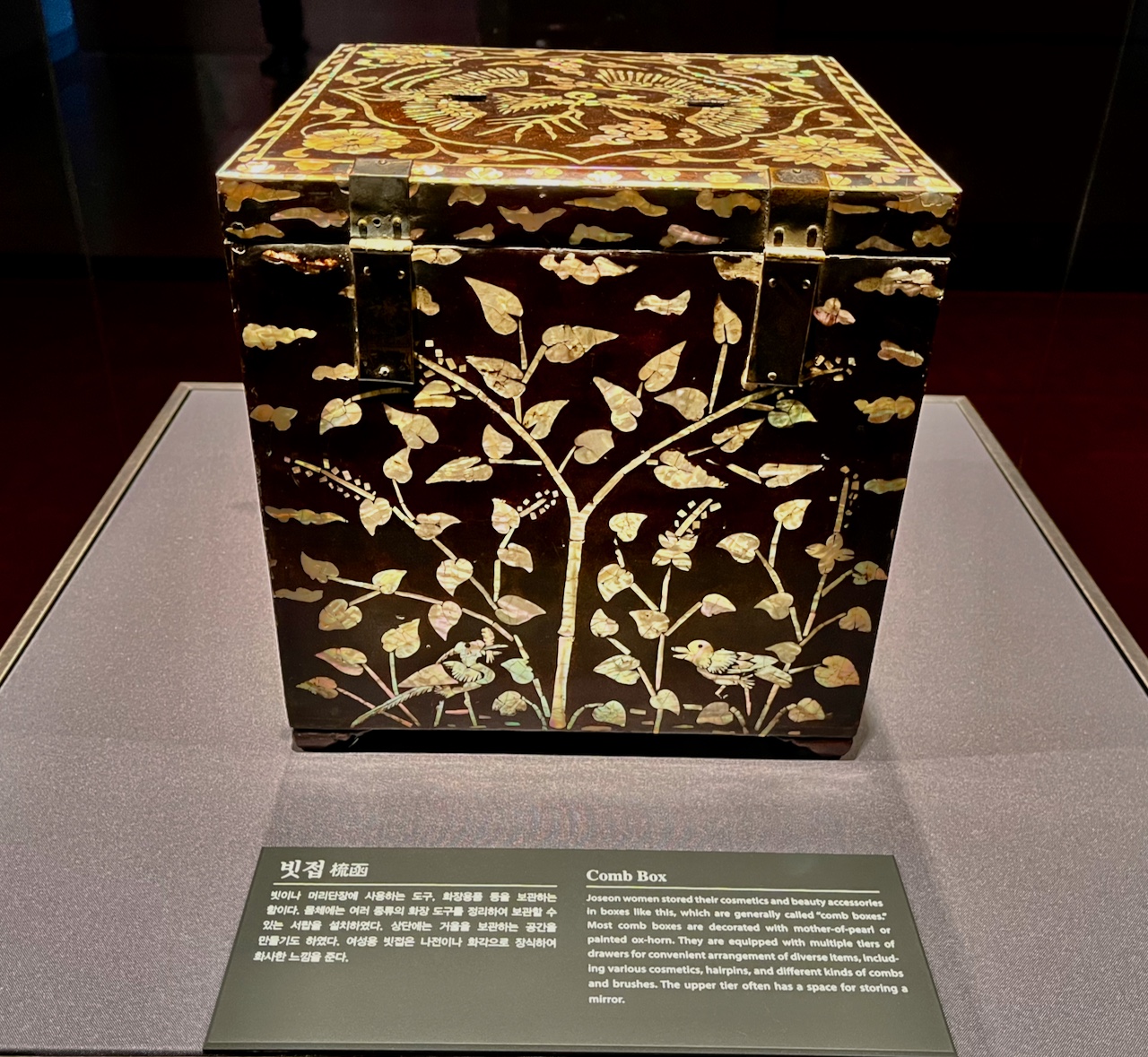
美しい螺鈿。衣類をしまっておく大きな箱や、化粧道具をしまう函。
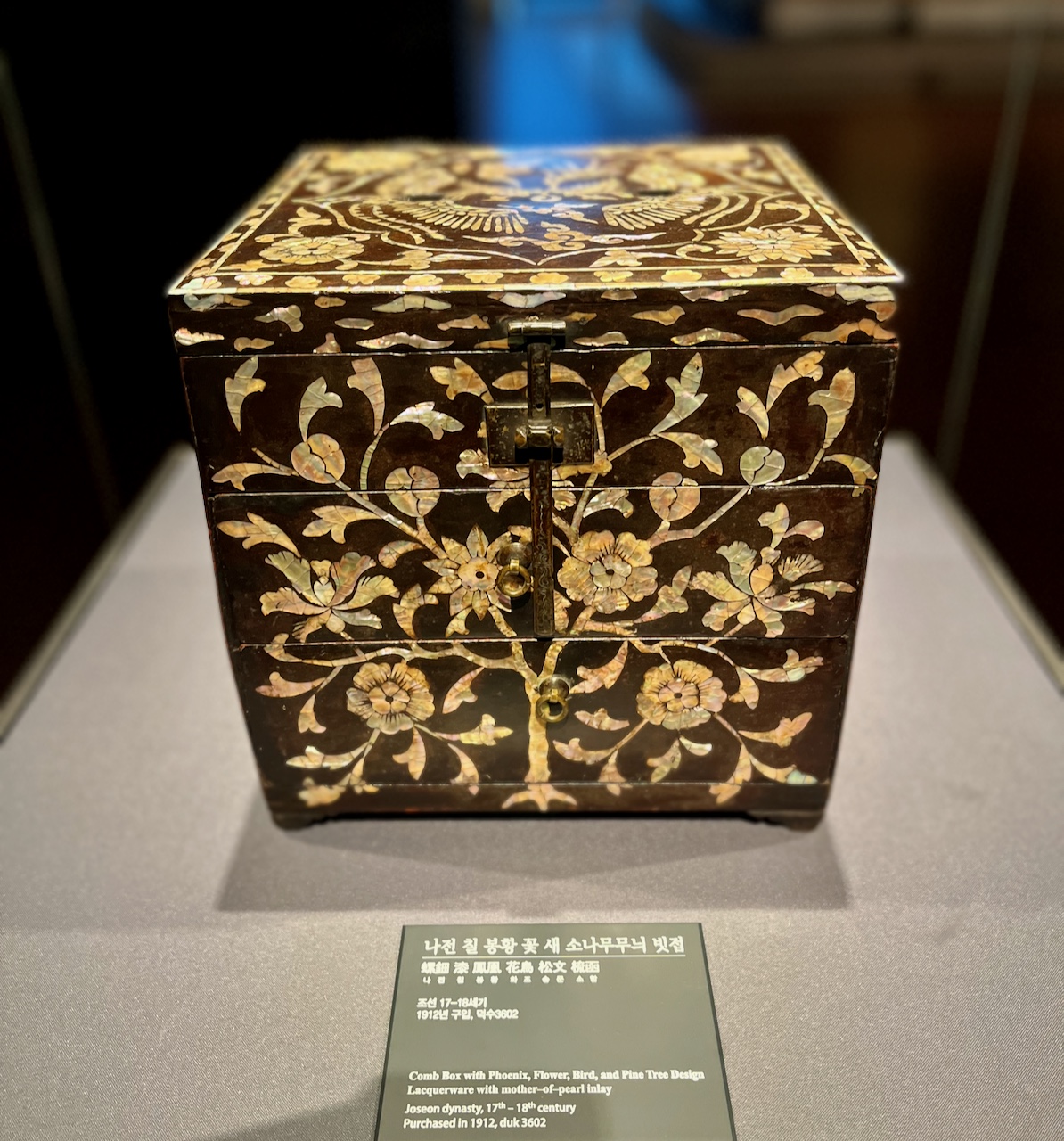
(よく韓国のドラマに出てくる!!いちばん上の蓋を開けると鏡になっているもの。本物が見られて良かった。。。)
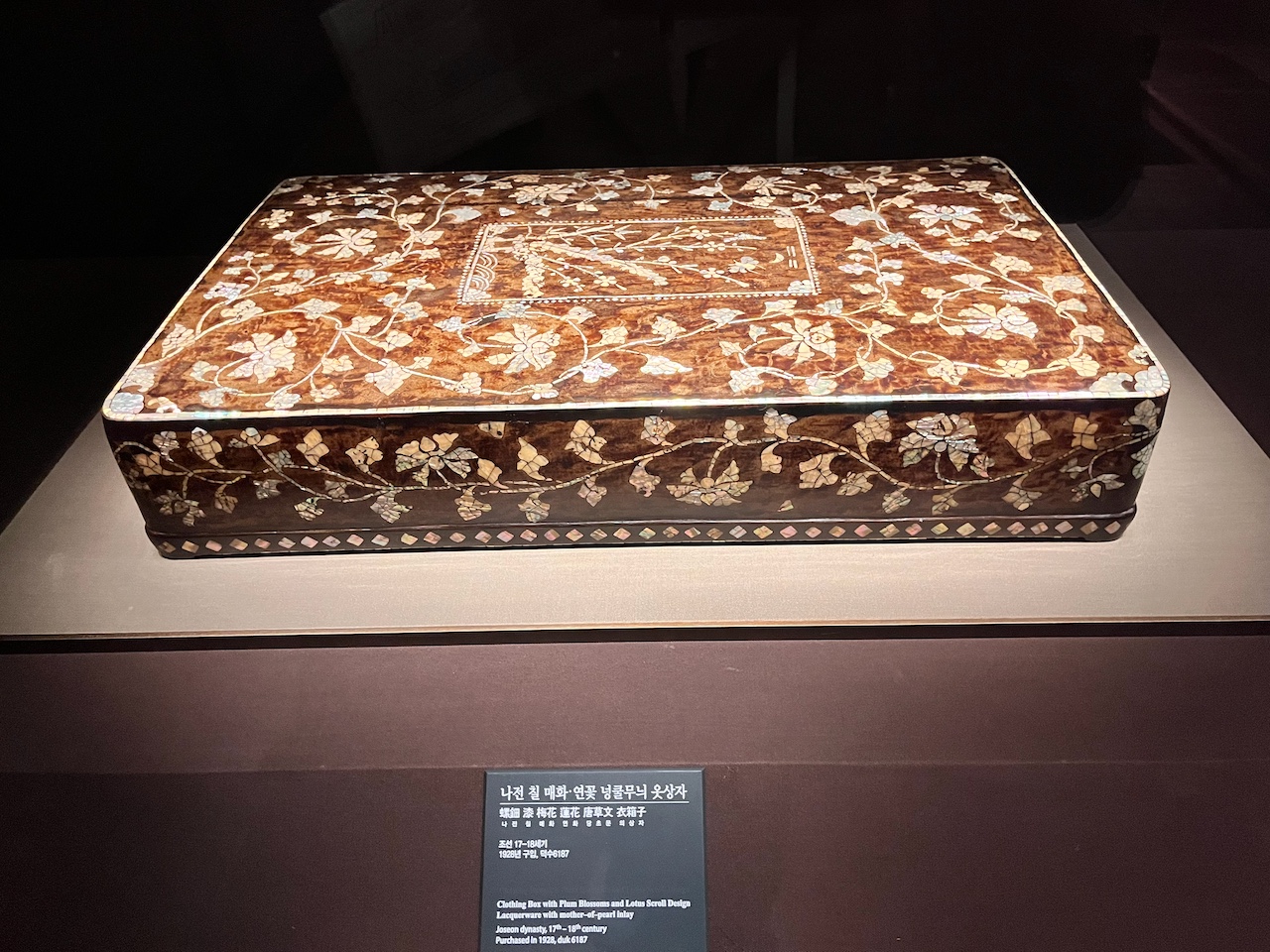
内房(アンバン)家具(ソウル国立博物館の解説)
朝鮮時代の内房は、女性が子どもを育て、所帯を切り盛りする空間で、穏やかで落ち着いた雰囲気で作られた。そのため、質素な雰囲気のサランバン家具とは異なり、明るく温かみのある家具が用いられた。
内房(アンバン)家具には、木目の美しい欅や墨柿、モクセイが主に用いられ、螺鈿や華角で装飾されることもあった。文様としては、女性好みの花や鳥の文様、そして富と福、長寿を願う吉祥文様、十長生の文様が用いられた。内房(アンバン)の代表的な家具としては、衣類や織物を保管するためのもの、さまざまなものを入れておく櫃、箱、パンジッコリ(裁縫箱)も挙げられる。さらに身繕いに必要な化粧道具を保管する櫛笥と鏡台も内房(アンバン)に欠かせない家具であった。
(東京国立博物館による「内房(アンバン)」の解説)
儒教を重んじた朝鮮王朝時代(1329~1910)、「男女7歳にして席を同じくせず」という考えのもとに、男女の生活空間は厳しく分けられていまし た。王族や特権階級である両班(ヤンバン)の子女たちは、外出さえ厳しく制限され、日常の大半を内房(アンバン)と呼ばれる居室で過ごしました。
Furniture for Women’s Quarters
The female living space, or anbang, where women raised children and managed daily household affairs, was typically located in the inner quarters of a house. The atmosphere was usually very warm and cozy, and the furniture was light and graceful, in direct contrast with the stern austerity of furniture in the male quarters.
Anbang furniture was usually made from woods with a beautiful grain like zelkova, black persimmon, or ash, and it was often elegantly decorated with mother-of-pearl or painted ox-horn. Reflecting feminine tastes, popular motifs included flowers, birds, the “ten longevity symbols,” and other auspicious symbols expressing wishes for wealth, happiness, and longevity. Major furniture and accessories of the anbang included large wooden chests and cabinets for storing clothing and fabrics; smaller cabinets and chests for storing valuables and other items: boxes for sewing equipment and combs: and cosmetics boxes with a mirror.
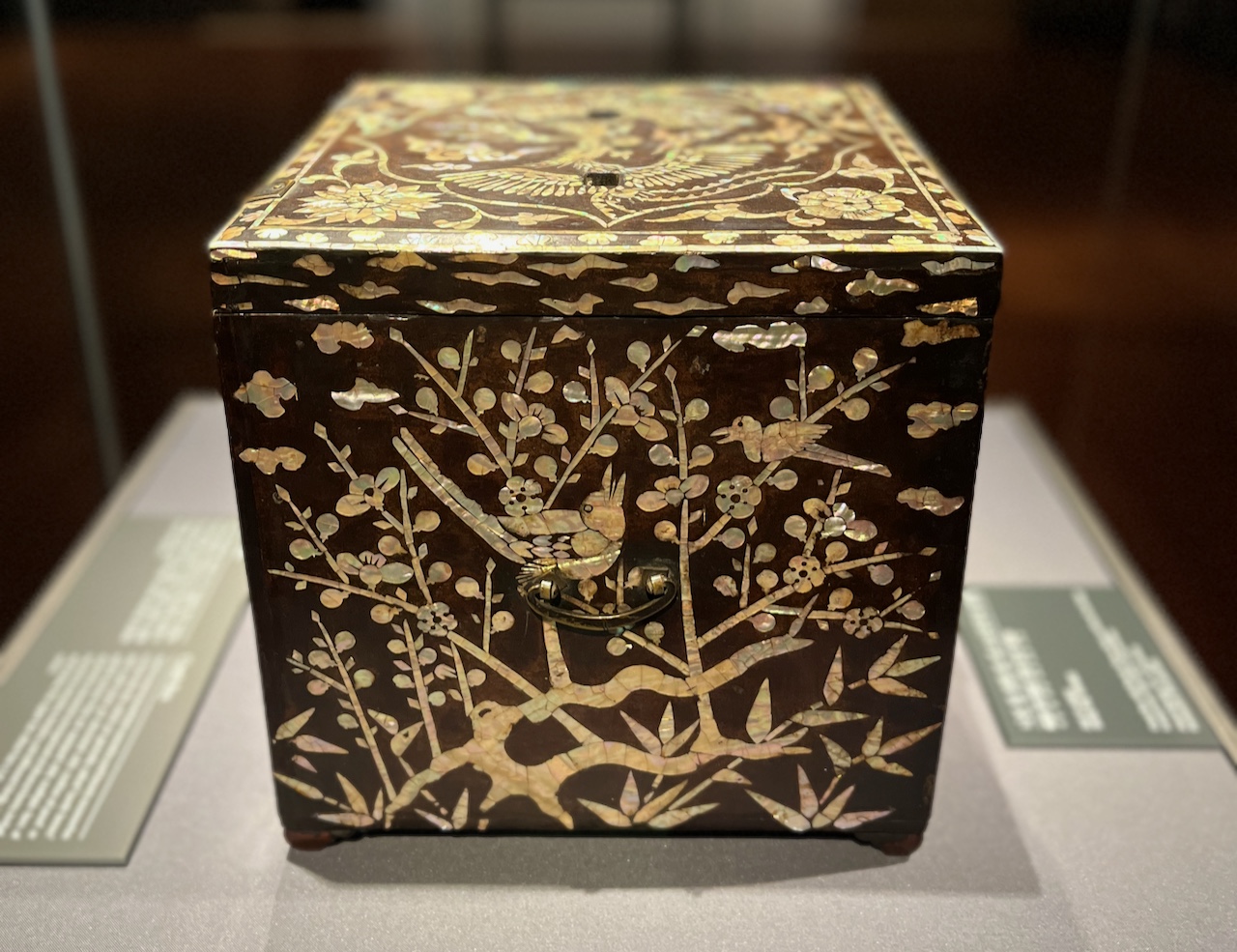
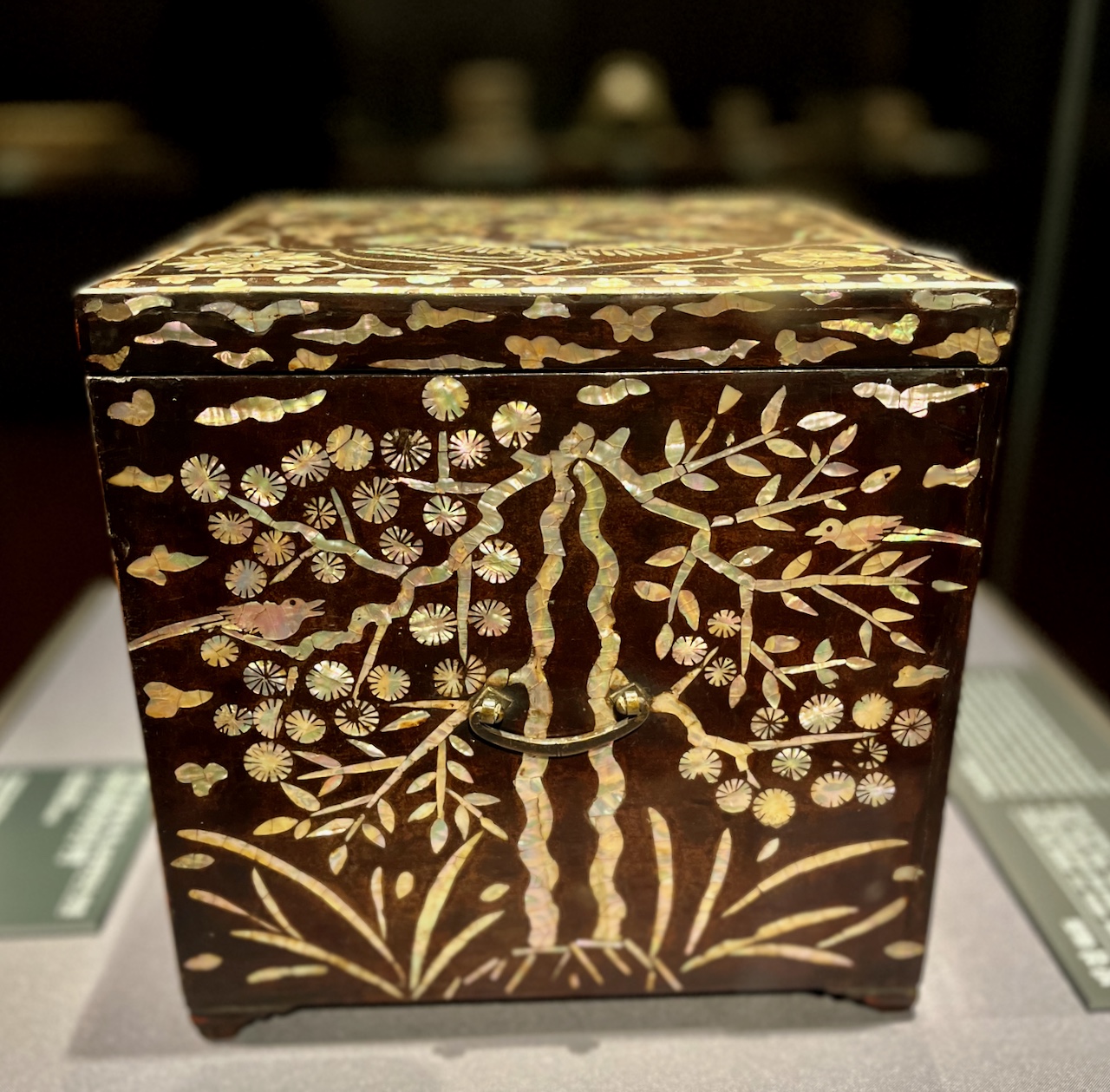
螺鈿漆鳳凰花鳥 松文梳函 朝鮮時代17−18時代
Comb Box with Phoenix, Flower, Bird, and Pine Tree Design Lacquerware with mother of pearl inlay. Jose dynasty, 17th-18th century.
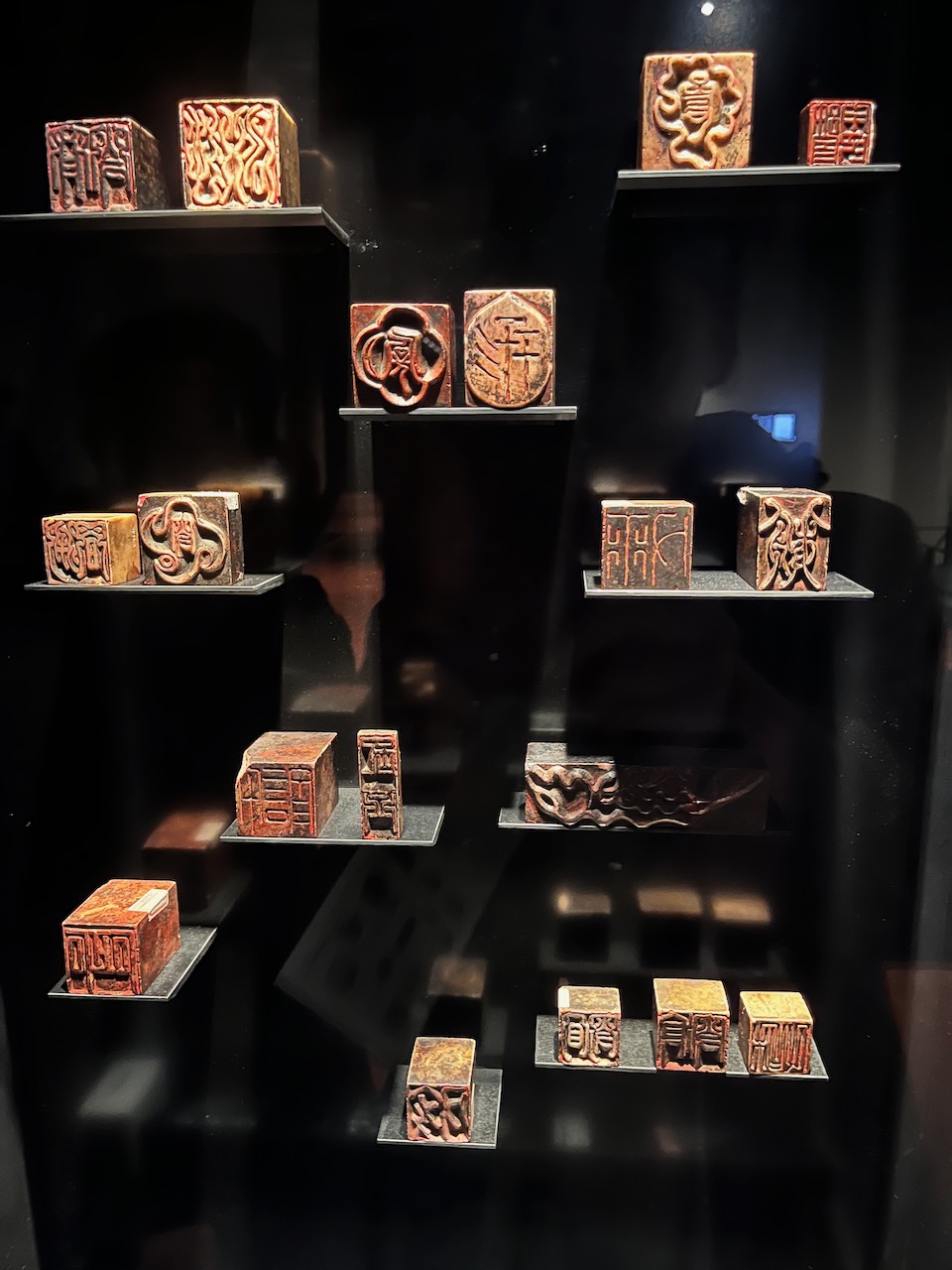
下のハンココレクションは、17世紀李氏朝鮮後期の知識人・政治家・書家・画家である
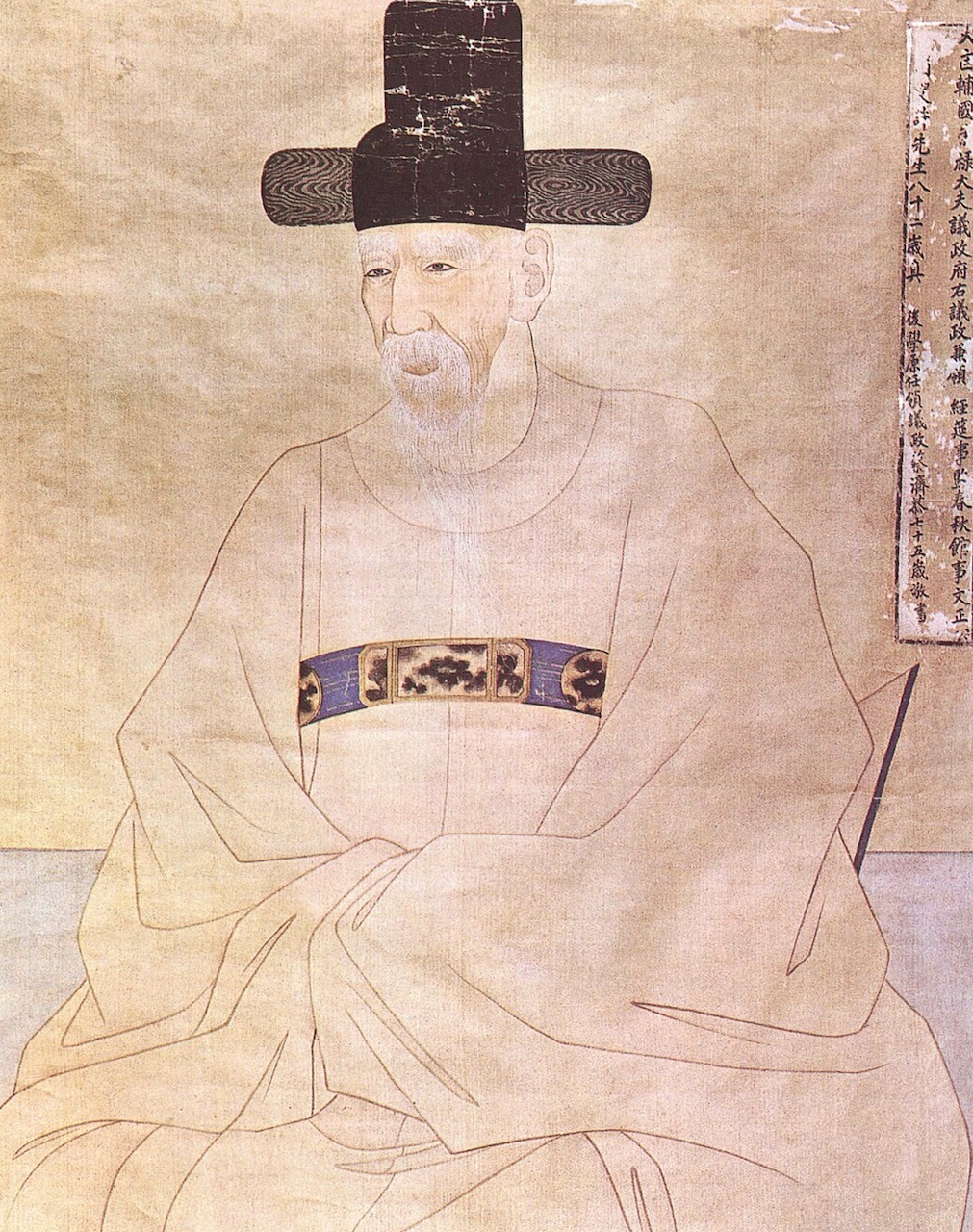
許穆 ホモク、Heo Mok (1596年〜1682年)
のものであると解説にあります。
よく保存されていましたねー!!
その場で説明を見ても、浅学にして HeoMokが誰であるかわからないので、今になって調べてみて、びっくりしています。
Heo Mok (허목 ; 許穆, 1595-1682) était un homme de lettres, philosophe, savant et artiste.
屏風も、まるで現代のグラフィックデザイナーの作品のよう。
冊架圖 Chaekgado, Scholar’s Accountrements on a Bookshelf
Yi Eungrok (Korean, 1808-after 1874) 17世紀後半になると李氏朝鮮では文化の爛熟期を迎え、両班から庶民まで書物を手にいれることができるようになって「冊架圖」という「本棚に縁起の良い花や果物、書物や書斎で使う筆や硯など様々なものを描いた屏風が流行した。

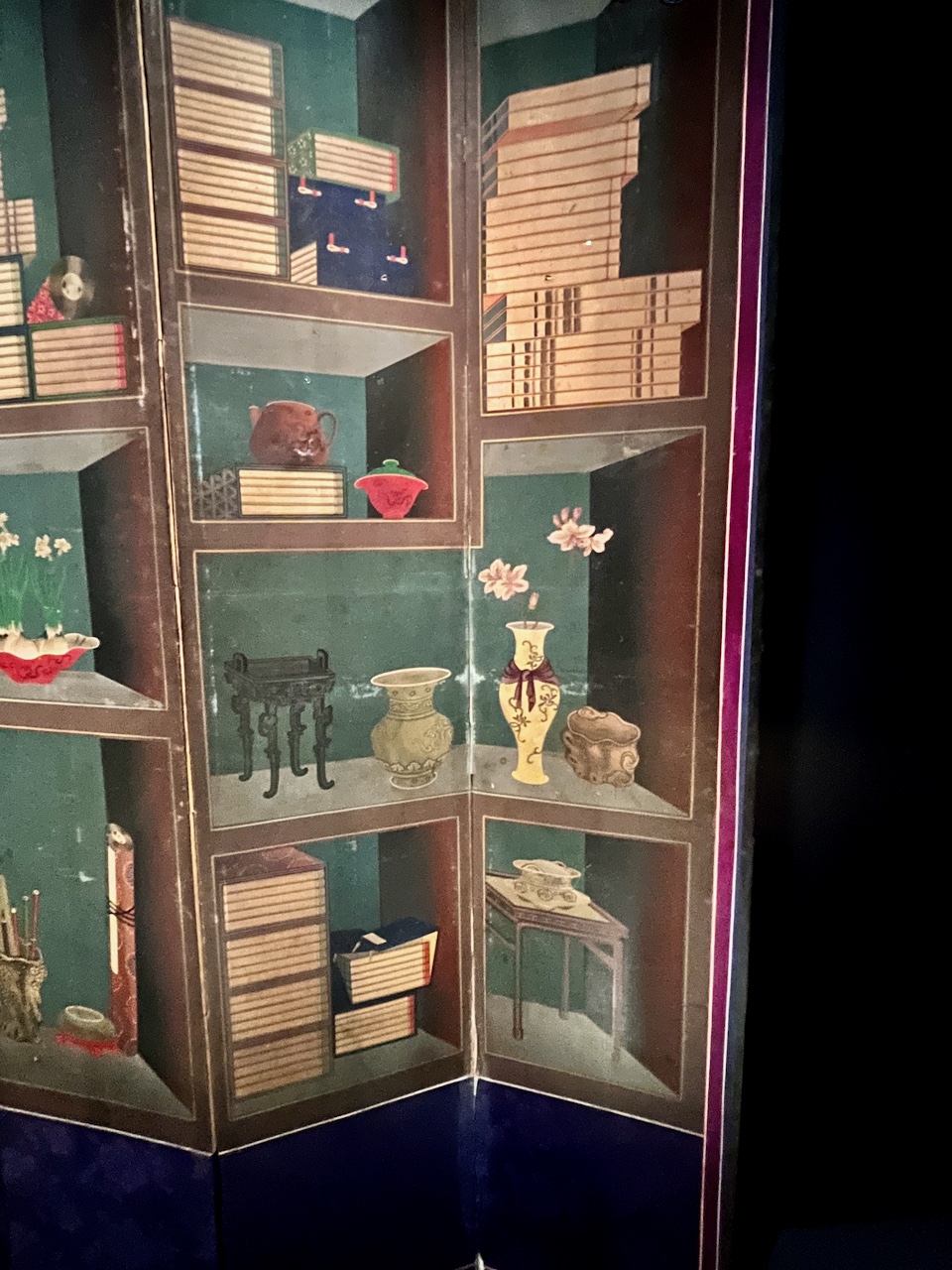
This work is a chaekgado painting that depicts a bookshelf led with books, bronze ware, valuable ceramics, brushes, inkstands, and auspicious flowers and fruits.
The panels create a bilateral symmetry with the fifth and sixth panels at the center. The use of a modified type of perspective perspective adds a sense of space and depth. The objects featured in such chaekgado paintings were items used by the Joseon royal family and the upper classes wished to own. They were fashionable imported goods or otherwise valuable items. The court painters Yi Yunmin and his son Vi Hyeongrok from the eighteenth and nineteenth centuries were especially proficient at painting chaekgado. Yi Hyeongrok sometimes inserted a seal with his name into his chaekgado paintings. The production date of this folding screen is presumed to fall between 1864 and 1871 considering that Vi Hyeongrok was using the name Yi Eungrok in these years.
(つづく)
 Sachan in Europe agrandie