実は今回自然史博物館へ行ったのは、BB村で会った親友夫妻の娘Kちゃんから勧められたからなのです。美術史博物館の向かい側に聳える自然史博物館は、いつも比較的空いていて入りやすい。でも今まであまりじっくり見た記憶がありませんでした。
Kちゃん お母さんのSさんやお父さんのJさんと一緒に、馬に乗るところをよく見に行っていたけど、もうすっかり大人になっていて、大学院で考古学を専攻して、今は子供たちに大昔の人たちの生活を知らせる活動をやっているそうです。
BB村の家に行った日は、午後から「昔の人はこんなスナックを食べていた」というものを持っていくのだ、ということで、蕎麦粉?にいろんな草?ハーブ?を混ぜて油で揚げたお団子みたいなものを作っていました。
時々Instaに、昔の衣装を着てなんだかやっているところや、昔のお姫様の格好で馬に乗っているところなどが出てきます。
すごく夢中になって説明してくれたのは、大昔の布の話。塩の鉱山の跡の地中から発見された繊維や布の断片を研究していて、その展示が自然史博物館にあるから、絶対見に行ってね!と教えてくれました。
THE BRONZE AGE SALT MINE OF HALLSTATT
At the NHM Vienna research station 400 m above the Hallstatt lake archeologists discovered traces of large-scale Bronze Age salt mining – one of the first onsets of European industrialization.
After decades of research they were able to draw a detailed picture of mining at the time. Men, women and children worked in the mines.
Objects such as carry sacks and the oldest wooden staircase found in Europe are technical masterpieces and indicate a clear division of labor. Mining also involved important tasks above ground: felling trees and transporting wood, making tools and pine chips, sourcing food from the high valley and alpine meadows, etc.
Salt was not the only mass product that was produced in the high valley of Hallstatt.
Archeologists have also uncovered thousands of pig bones and massive wood-lined salting basins there – the remains of cured-meat production and large-scale trading with bacon and ham.
青銅器時代の岩塩坑 (ハルシュタット) wikipediaにも説明がある
塩の鉱山では塩を大量生産するだけでなく、ハムやベーコンを作っていたことがわかった。

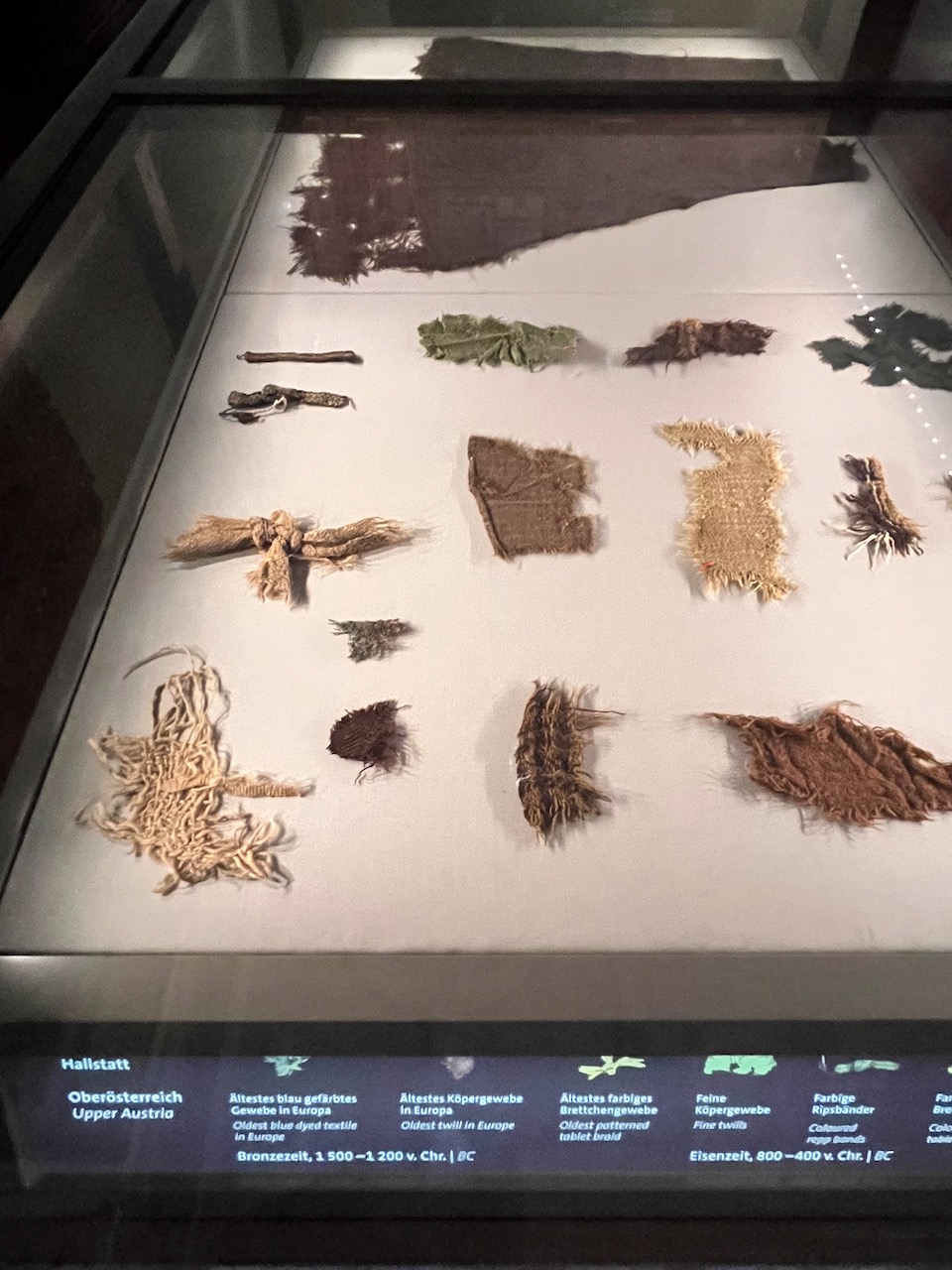
(1) 紀元前1500-1200年 ヨーロッパ最古青銅器時代の布
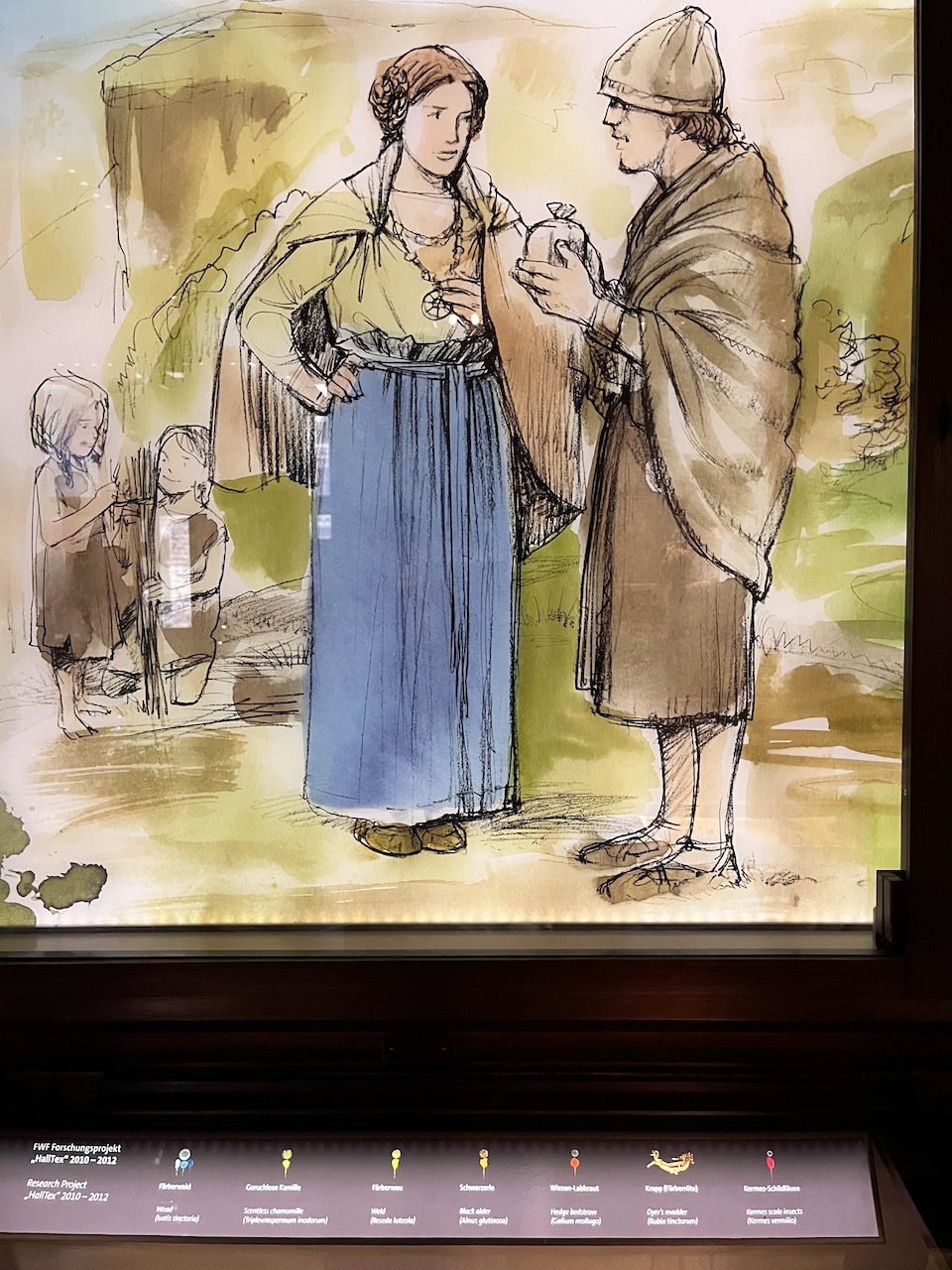
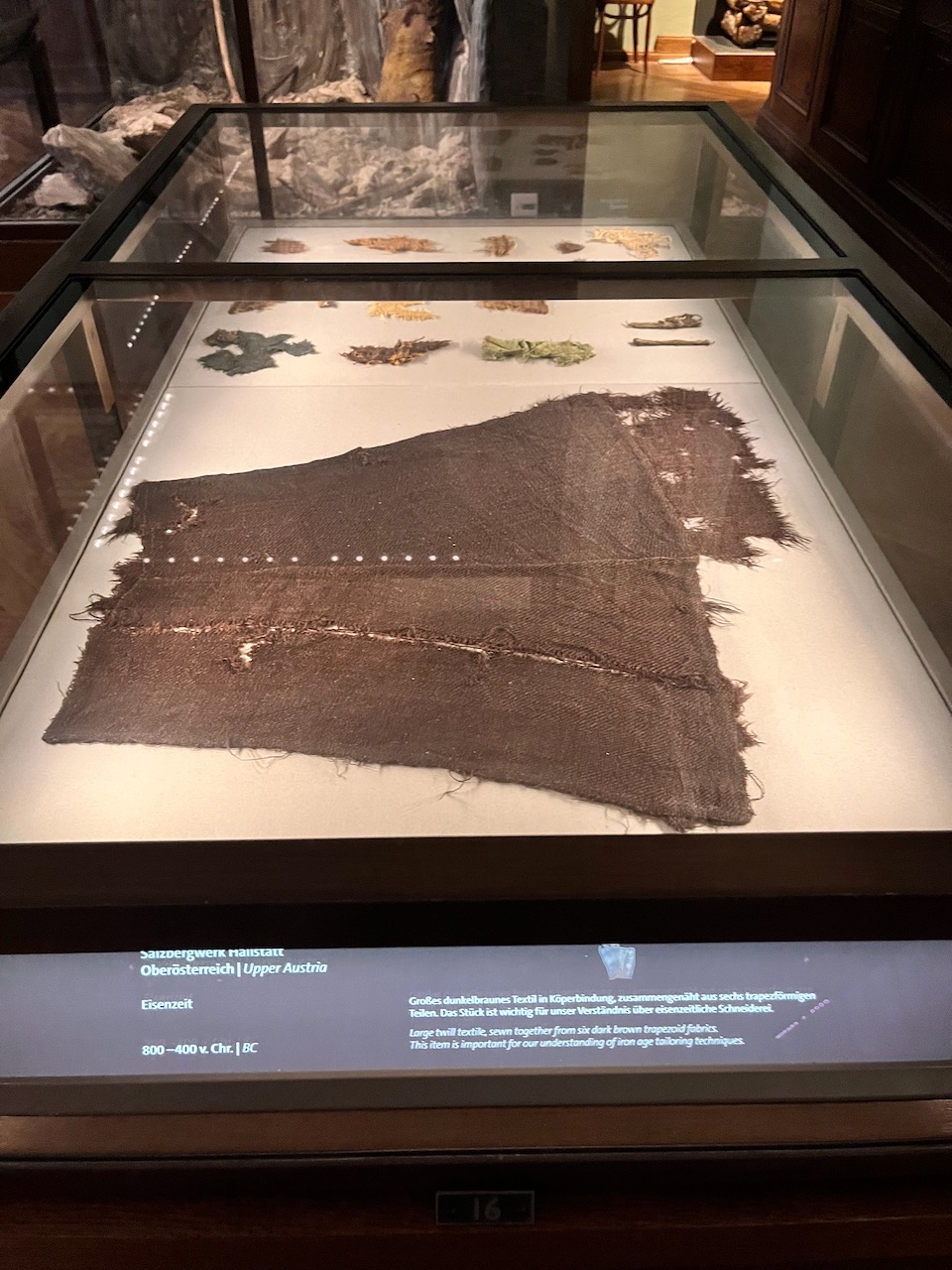
(2)ハルシュタットの塩鉱山から見つかった、縫い合わされた6枚の布。鉄器時代(紀元前800-400年)(3/4)ハルシュタットから見つかった紀元前1500 -300年の布地から、植物を使った染色方法、先史時代の繊維加工に使われた技術など、いろいろな疑問への答えがわかるようになった。
そのような研究成果をふまえて、色糸の模様のある組紐が復元された。


 Sachan in Europe agrandie