9月17日(木)
グレンダロッホの谷で発掘されたり発見されたものが初めて展示される展覧会が始まったという記事が新聞に出ていたので、早速ダブリンへ行ったついでに国立博物館へ。
コロナウイルス対応で予約制。とても空いていて、ゆっくり見られました。
国宝の展示してあるセクションも、誰もいない!
展示を見終わってお茶をしにいったところも、貸切状態。
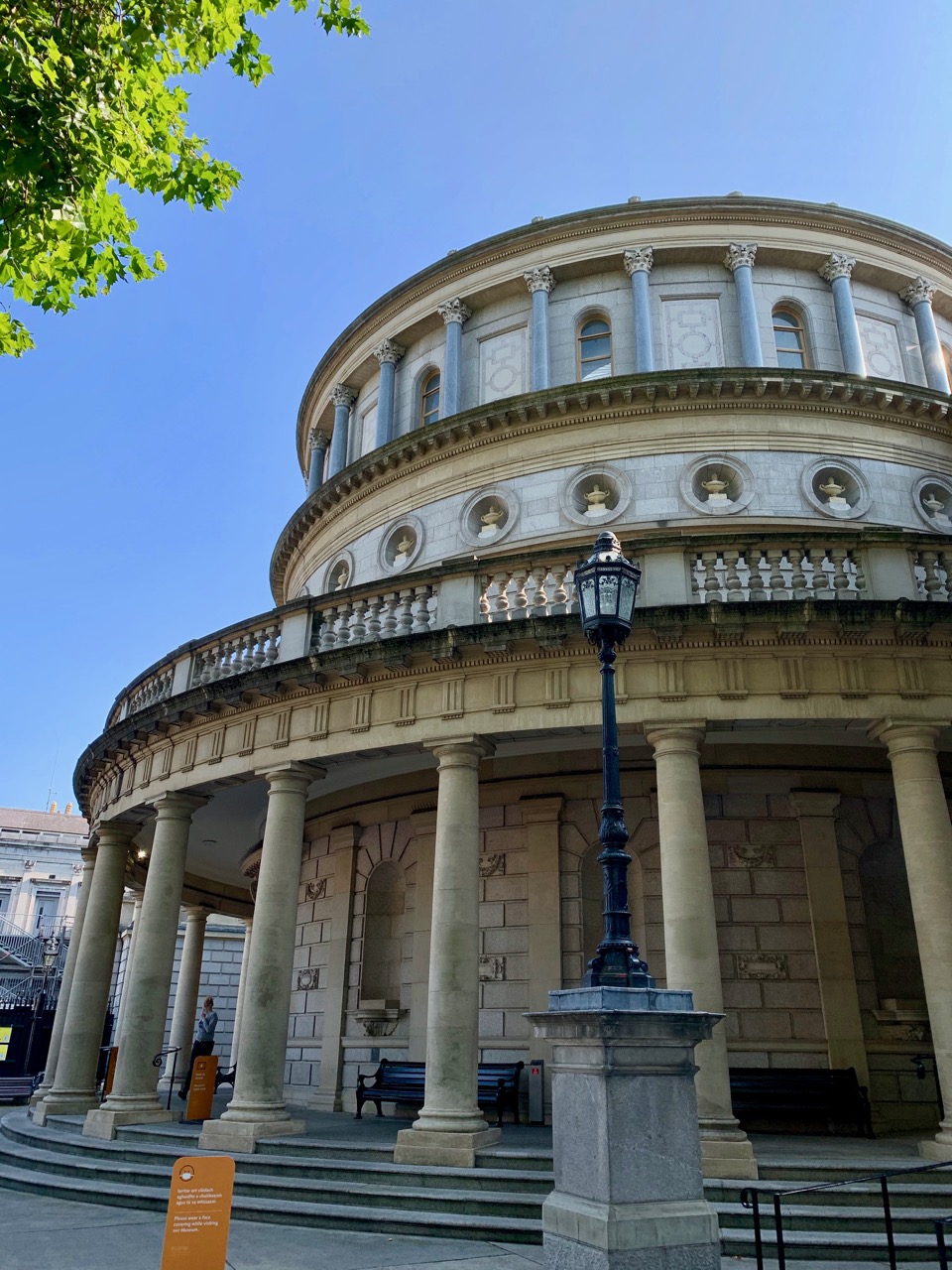
グレンダロッホの展示はとっても地味な内容。博物館の片隅でこじんまりやっている感じの展覧会でしたが、いつも歩いている地元なので、最高にエキサイティングでした。
細かい説明など、その場では読み取りきれません。写真をいっぱい撮ってきて、家でゆっくり解読してビデオも日本語と英語両方作りました。
(この投稿のいちばん後にあります)

以下は展覧会で見たものの一部です。
Glendalough and its churches : 6th – 13th century AD
グレンダロッホの教会遺跡群 6世紀〜13世紀
グレンダロッホは、アイルランドに数多く遺されてある修道院遺跡のなかでも最も重要なところです。
Saint Kevin (Coemgen) が6世紀末か7世紀初めごろに創立したものと伝えられています。貴族の家に生まれたケヴィンがここグレンダロッホで祈りの生活をしました。湖にいた化け物を退治したという伝説もあります。
Glendalough is one of Ireland’s most important monastic sites. It lies in a beautiful walley between two lakes in County Wicklow.
Saint Kevin, or Coemgen, is recorded as the founder of the monastery in the late 6th / early 7th century. The earliest stories of the life of Kevin, describe how a nobleman led a simple life of prayer here and banished a monster from the lake.
アッパーレイクのエリアには、隠者Saint Kevin が祈ったり眠ったりしたという、St Kevin’s Bedという洞窟があります。
グレンダロッホへ巡礼し祈ることは、ローマへ旅すると同じほど価値あることとされました。
Two churches and an artificial cave, St Kevin’s Bed, are found at the upper lake.
The value of prayer visits or pilgrimages to Gleandalough was comparable to travelling to Rome.
こうした歴史的な背景と同時に、考古学調査で発見された様々な証拠を見ることで、初期の修道院遺跡グレンダロッホの生活を知ることができるのです。Alongside the historical evidence, the archaeological findings provide important evidence for life in this early monastery.
Archaeological Investigations at Glendalough
グレンダロッホにおける考古学調査
1950年代から現在に至るまで、グレンダロッホの谷の6箇所で考古学発掘調査が行われました。また駐車場やヴィジターセンターなどを建設した際にも、小規模な発掘調査が行われました。
Targeted archeological excavation from the 1950s to the present day has been carried out at six places in the valley. Smaller archaeological excavations also took place during development works at Glendalough.
発掘調査では石や丸太づくりの家や、大きな囲いの跡が発見されました。
修道院を外敵から守るためにこうした壁を建てていたのか、あるいは近くの水車小屋まで水を引くためのものと考えられています。
Excavations have uncovered stone and timber houses and large enclosures which might have served to defend the monastery or perhaps carry water to nearby mills.
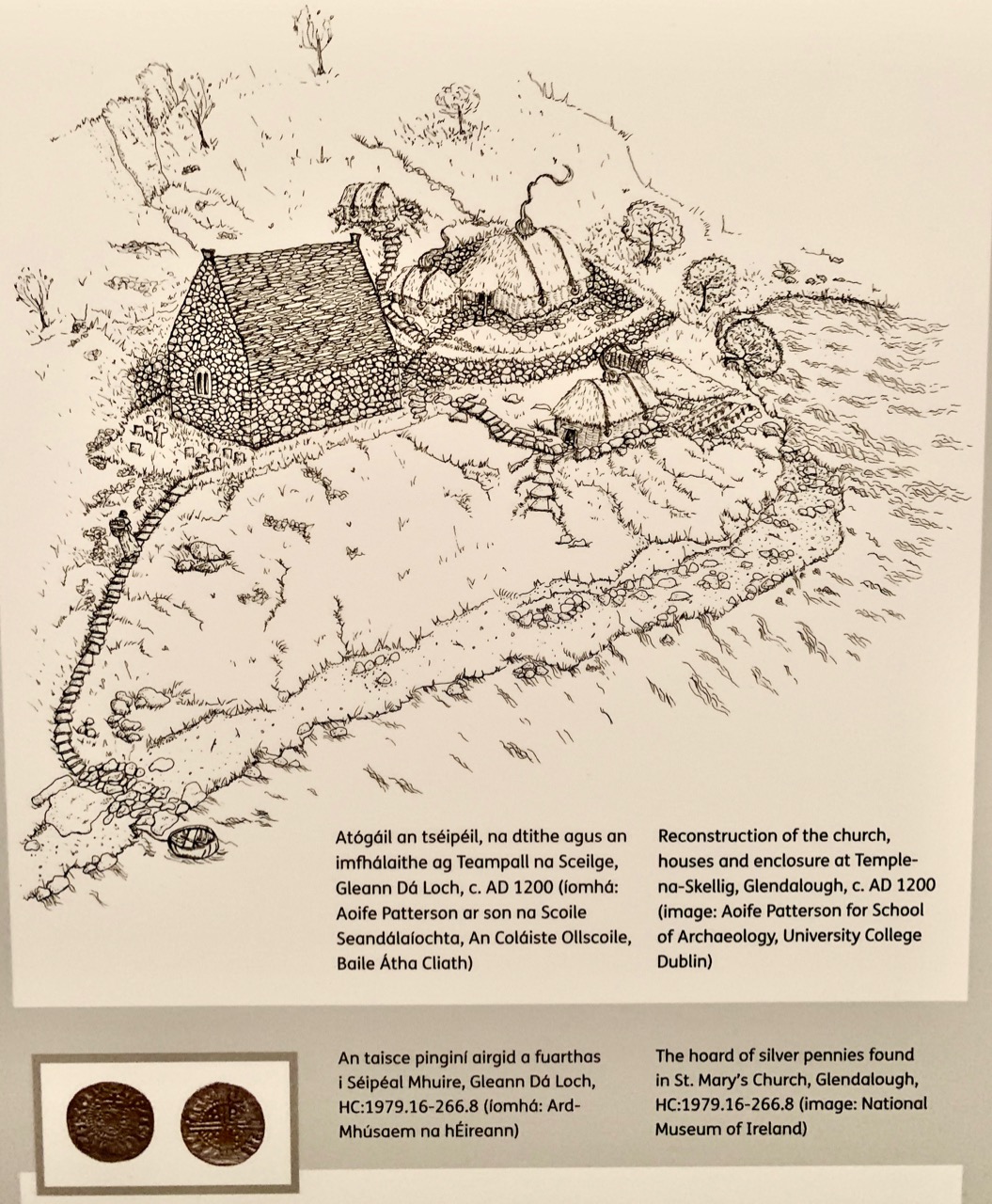
以前にバスケットづくりを教えてくれたAoife Ptterson(イーファさん)が
考古学の修士論文で描いたもの。
また壺や道具、石臼、装飾のついた留め針など、様々な品物が発掘され、グレンダロッホが非常に栄えていたこと、また広い世界とのつながりがあったことが明らかになりました。
Artefacts found during these excavations include pottery, tools, mill-stones, decorated pins and mounts and show the power of the monastery and also its extensive contacts with the wider world.
湖の付近の深い沼地から採取した花粉のサンプルから、1万年前からグレンダロッホの谷の景色が変化を遂げてきたことがわかります。
発掘調査では焼け焦げた植物や炭化した木材も見つかり、様々な穀物や草木が栽培利用されていたこと、付近の森林が切り拓かれ利用され、一時は完全に切り倒され、後の時代になって植林されたことが明らかになりました。
Pollen from samples taken in deep bogland near the lakes has shown how the landscapie in Glendalough Valley has changed over the last 10,000 years.
Burnt plant remains from the excavations show how different cereals and weeds were grown and used. Charcoal remains demonstrate how the woodlands in the valley were exploited and in later times almost completely removed before being partly replanted.
14世紀の大鍋 Copper-alloy cauldron, Glendalough, Co.Wicklow
銅の鍋は中世の頃、大家族の食事のスープを煮る大切な道具でした。
これと同じような大鍋がキャッスルケヴィンのアングロノーマンの城でも発見されたと言われています。
Copper caudrons were important for cooking potage for large households in the medieval period.
Similar cauldrons were reportedly also discovered at the Anglo-Norman castle at Castlekevin, Co.Wicklow. 14th Century, AD

15−16世紀 木造の聖像
イチイの木を彫って作られた像。おそらく聖人だろう。1930年にアッパーレイク近くで発見された。
Gilt wooden statue of a saint. Lugduff, Co.Wicklow
This carved statuette is made of yew wood and depicts an unknown figure, probably a saint. It was discovered in 1930 in a ruined building near the upper lake at Glendaloug. 15th or 16th century AD

Footprints of the Pilgrim -Glendalough in the Wider world 7-12 th Century AD
巡礼の足跡 グレンダロッホと外の世界のつながり
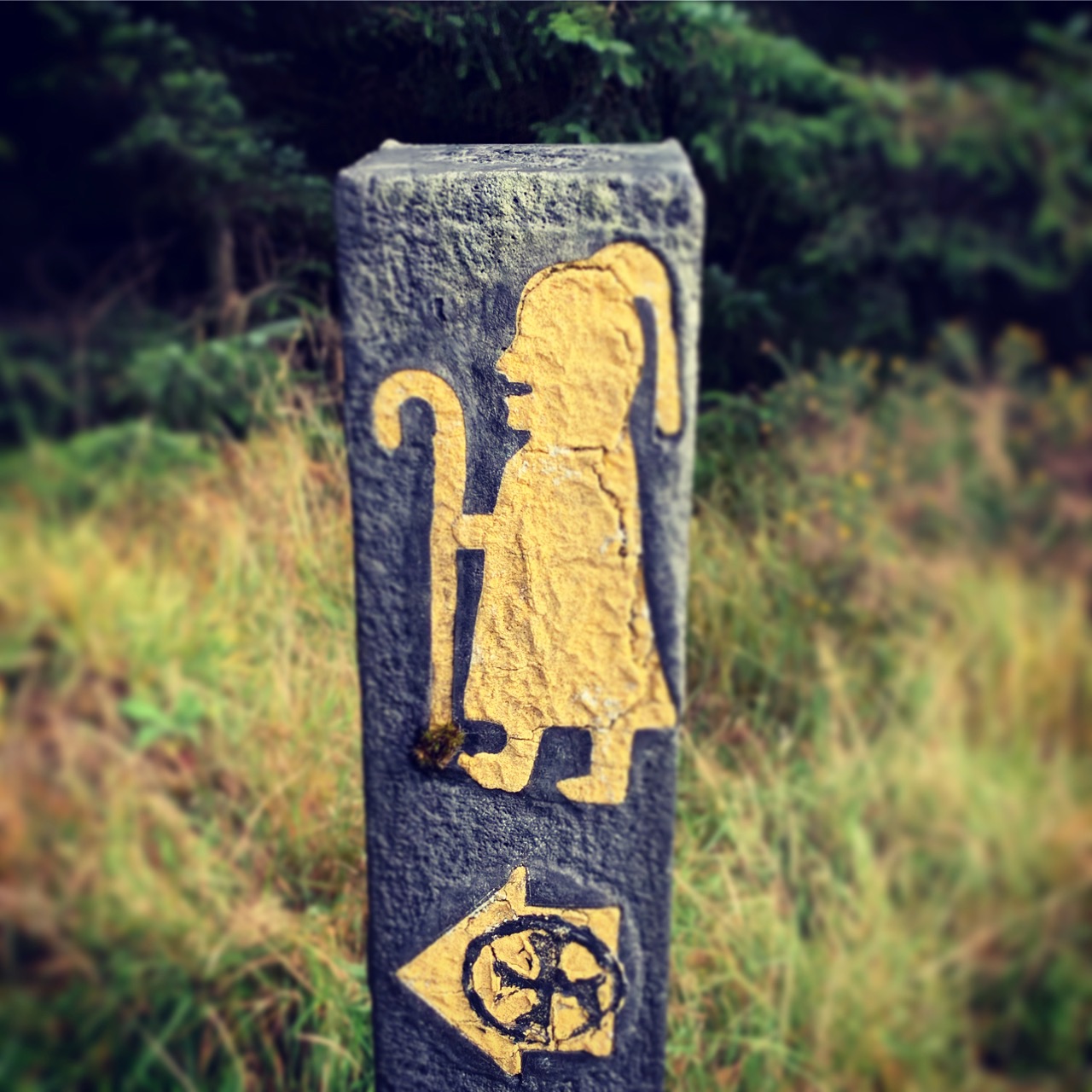
7世紀から12世紀まで、ウィックロー山地を横切る巡礼の道セントケヴィンウェイを通って、各地から巡礼の人々がグレンダロッホを目指してやってきました。
巡礼の道は十字架や、十字架の印のついた石や教会が道しるべとなっていました。
女のひとの靴 AD 889ー1033
これがいちばん見たかったもの!!干物ではありません!
(AD889というと、日本では平安時代。宇多天皇、醍醐天皇の名前が。
894年に9月菅原道真の建議により遣唐使が中止された。)
Lugduff, Co.Wicklow. ← このLuggduffというのはLowerLakeとUpper Lakeのあいだの地域です。沼のような湿地で、この靴の片方が見つかったそうです。
一枚の牛の皮を縫い合わせて作られた靴。
おそらく女の人の履物だったと思われる。すり減るまで履いてある。


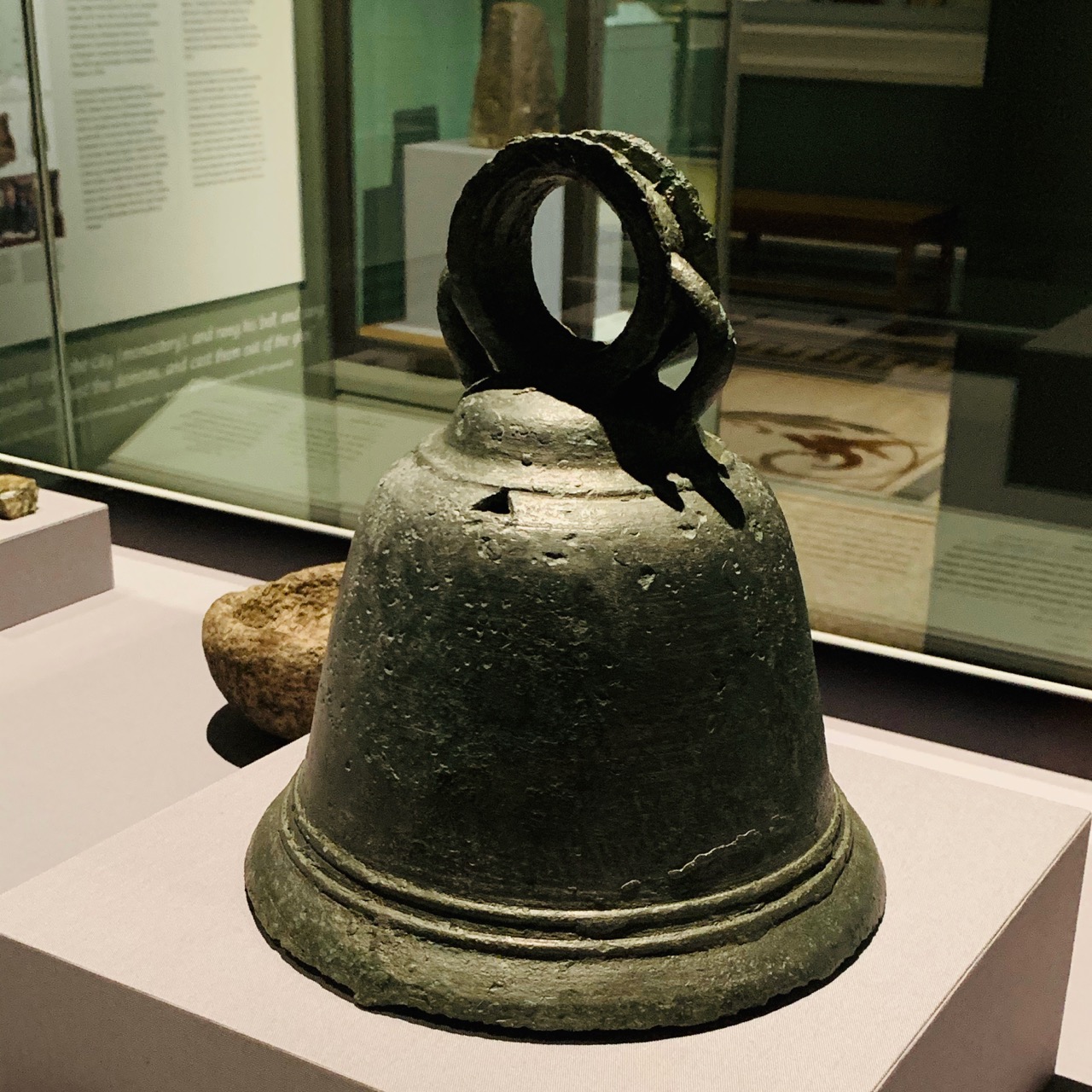
青銅のベル 11世紀後期/12世紀初期
おそらくはヨーロッパ北西部から持ち込まれたもの。
ロープをつけて鐘楼で鳴らす鐘としては、アイルランドで見つかった最も初期の例。
ヴァイキングの船
1962年にデンマークのロスキレ(Roskilde)のフィヨルドでヴァイキングの船が発見されました。
グレンダロッホの楢の木(Oak)を使って1042年頃に造られたものがデンマークまで航海をしてきていたのです。
2004年にロスキレのヴァイキング船博物館でこの船のレプリカが建造されて Sea Stallion of Glendaloughと名付けられました。
2007年にはダブリンまで航海をしてきて展示されました。

The Knockatemple Bell and Early Medieval Hand-Bells
ノッカテンプルのベル、中世初期のハンドベル
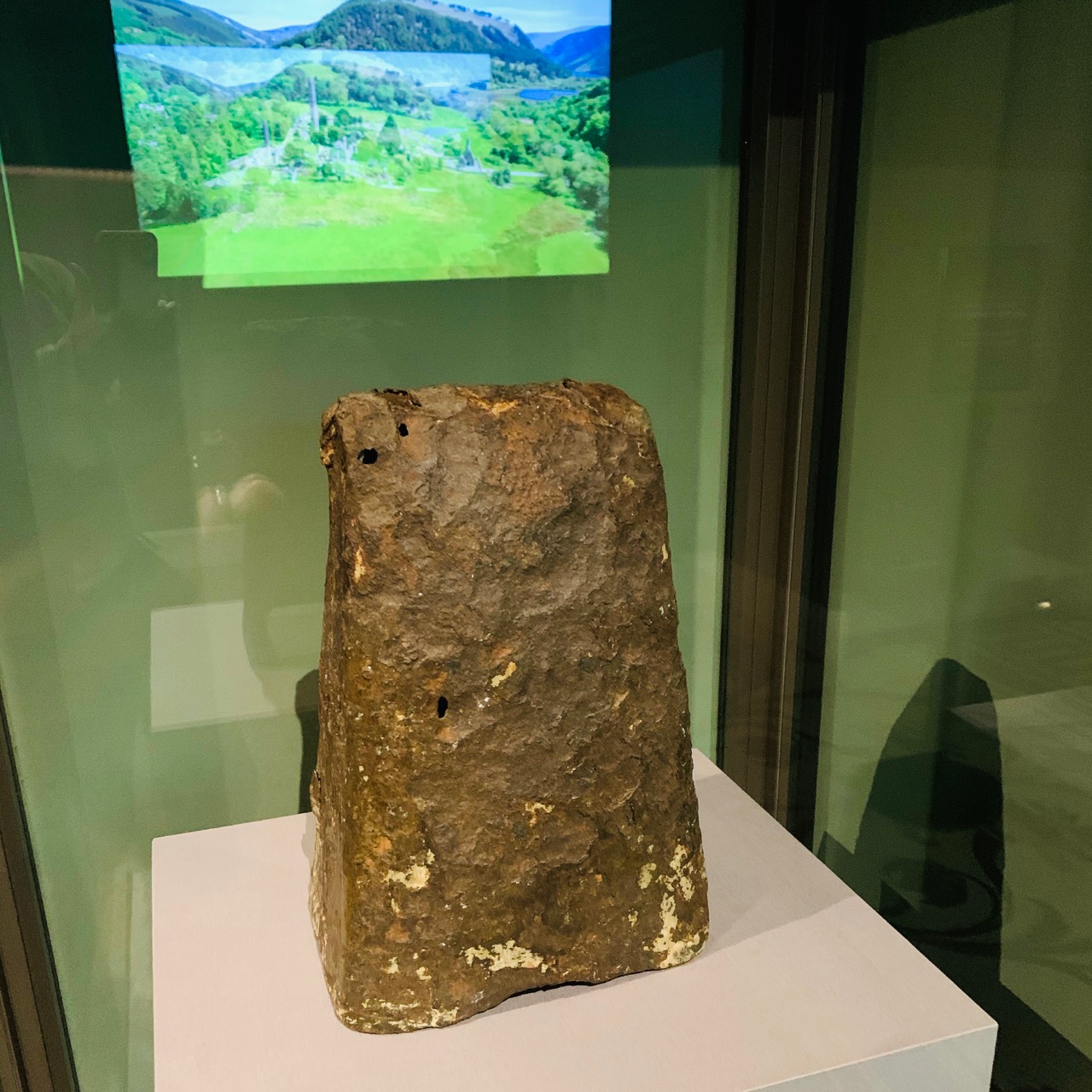
青銅メッキを施した鉄のハンドベルは、8世紀から9世紀のものです。
修道院の一日の時間、働く時間、祈りの時間を知らせるために、また死者を悼む場合に鳴らしたものです。
修道院を外敵から守るシンボルとして、あるいは敵を撃退するのにも使われたものと考えられています。大切なハンドベルは、持ち運びのできる厨子におさめてありました。
Bronze-coated iron hand bells date to the 8th and 9th centuries AD and were rung in monasteries to divide the day for work, prayer and to lament the dead.
Bells were also protective symbols for the monastery and could be used to curse enemies.
The most important bells associated with saints were enclosed in spectacular portable shrines.
グレンダロッホには、このようなベルがいくつかあったとの言い伝えがありましたが、このハンドベルが9kmほど離れたノッカテンプルの中世の教会の墓地で19世紀に発見されました。
ダブリンの大司教区が管理していたものが、2019年に国立博物館に寄贈され保存されています。
Although sources mention a number of bell linked to Glendalough, none has survived.
At Knockatemple medieval church some 9kms away, a hand-bell was, however, discovered in the 19th century in a grave along with other objects. The bell, which was heavily corroded and had its surface damaged by lime, is a rare example of a find from a grave.
The Knockatemple hand-bell was preserved in the collections of the Archdiocese of Dublin and was donated to the National Museum of Ireland in 2019.
このような鉄の製品を作る原料と技術が、8世紀−9世紀のグレンダロッホに存在していたと考えられています。
The technology and resources used to manufacture bells such as these were certainly present at Glendalough.
初期のベルを作るための粘土型や、メッキ塗装やハンダ付けの技術を持っていた証拠が、アイルランドの他の地域の修道院遺跡でも発見されています。
聖ケヴィンが「鉄鉱石を鉢に入れて砕いた」という言い伝えがありますが、グレンダロッホで数多く発見されている、bullaun stonesという窪みのついた石は、金属を加工するために使われていたものかもしれません。
The life of St Kevin mentions the crushing of iron ore in a mortar. Stone basins known as bullaun stones, many of which are found at Glendalough, may well have been used in this way.
The Deer Stone at Glendalough
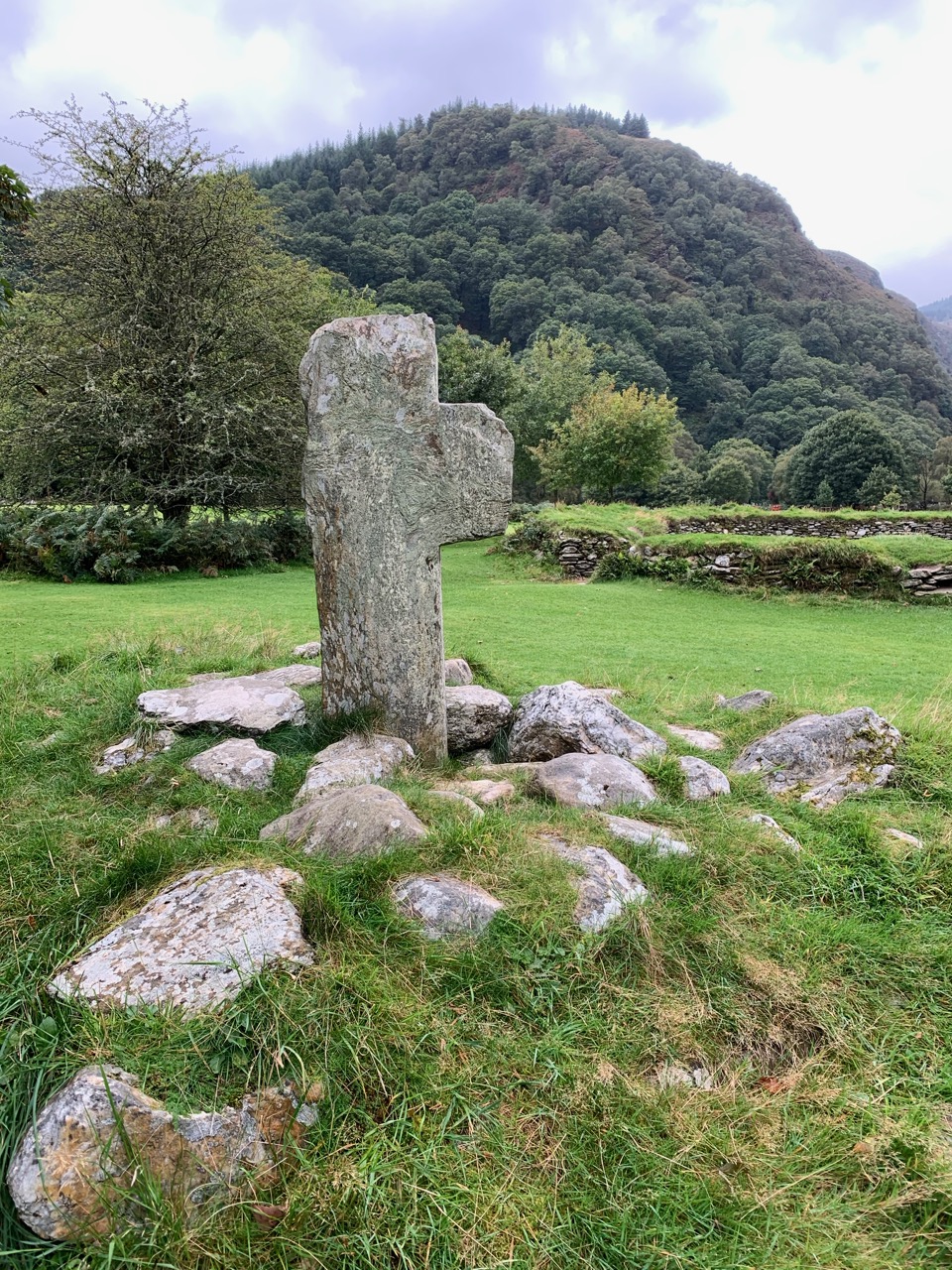
グレンダロッホのアッパーレイクのそばのthe Caherというところで6世紀の鉄鉱石のスラグ(鉱滓 こうさい)が発掘されたことからも、この地域で製鉄が行われていたことがわかる。
Iron slag from 6th century deposits was excavated at the Cher, a site at the upper lake at Glendalough, and indicate that an iron smith worked in the area.
 Sachan in Europe agrandie